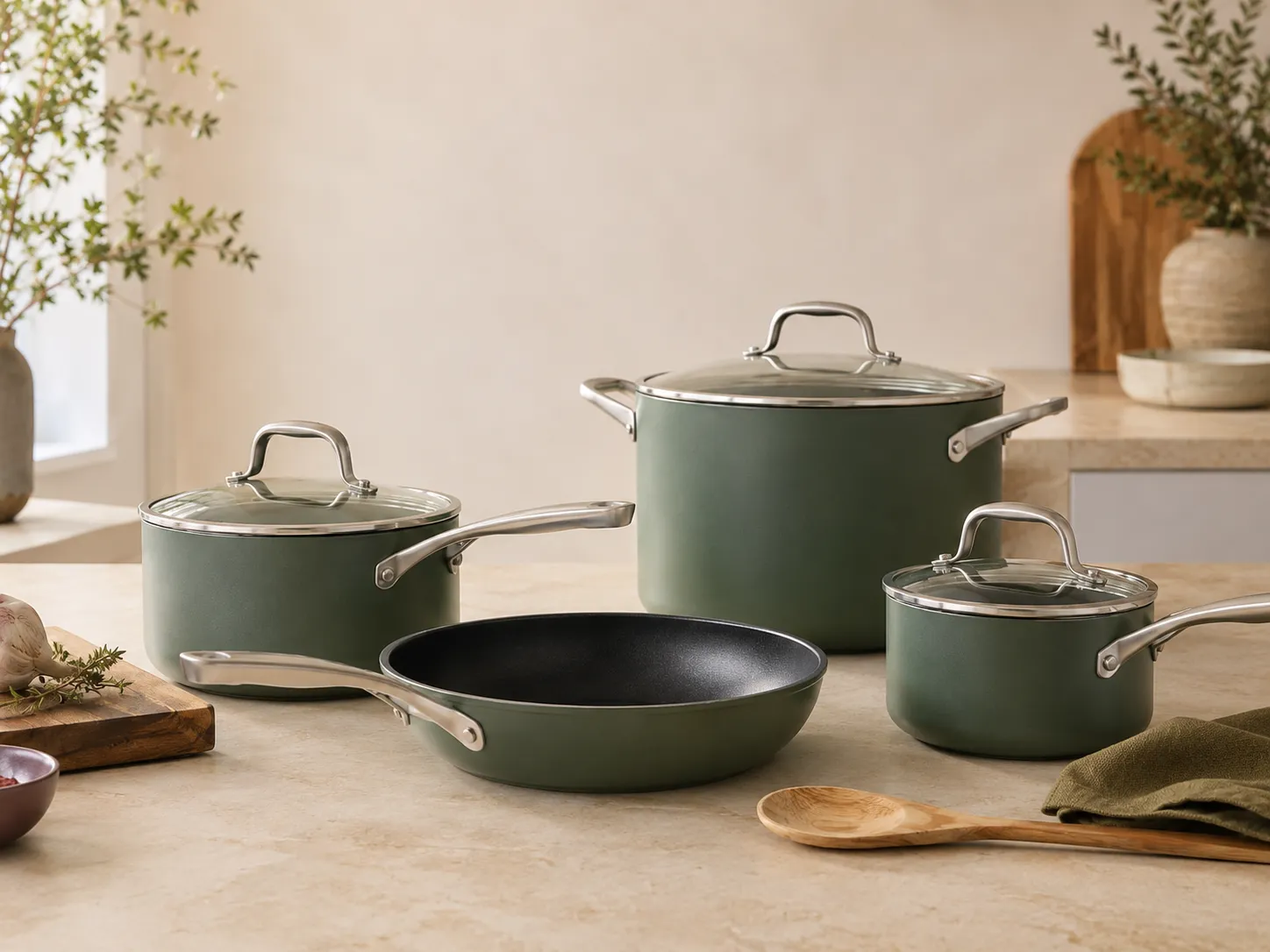
A ceramic nonstick pan is one of the easiest things to cook with right out of the box. Eggs slide, cleanup is fast, and everything just works.
Then, a few months in, food can start sticking even when the surface looks fine. More often than not, a care habit wore down the coating faster than it needed to.
Ceramic nonstick is not fragile, but it does respond to how you treat it. Moderate heat, softer utensils, gentle cleaning, and careful storage can make a real difference.
BrandCookware.shop may earn a commission from qualifying purchases.
Why ceramic nonstick needs gentler care
Ceramic nonstick coatings work differently from bare stainless steel or seasoned cast iron. Those materials can handle high heat, metal utensils, and aggressive scrubbing with less complaint.
The nonstick layer on a ceramic pan is relatively thin and engineered to be smooth. Scratches, overheating, and abrasive cleaning all chip away at performance over time.
Once the surface becomes rough or degraded, food has more places to stick. The good news is that the habits that keep ceramic nonstick working well are simple.
Heat: low to medium is usually safer
High heat, especially on an empty pan, is one of the fastest ways to degrade ceramic nonstick. Most ceramic nonstick pans work best at low to medium heat settings.
That range is enough for eggs, vegetables, fish, pancakes, and most everyday cooking. The coating does its job well there without being stressed.
If you are cooking something that needs high heat, such as a hard sear, stainless steel or cast iron is usually a better tool. If a pan is labeled oven-safe, check the temperature limit in the current listing.
Oil and cooking sprays
Most ceramic nonstick pans work better with a small amount of oil or butter, even though the coating is nonstick on its own. A little fat helps distribute heat and protects the surface during cooking.
Aerosol cooking sprays are a common issue because the fine mist can leave residue that is harder to wash off than regular oil. That residue can create a sticky film that affects release.
If you prefer spray, a refillable oil mister with plain oil is a cleaner workaround.
Utensils: wood and silicone are safer defaults
The coating needs to stay smooth to release food properly. Metal utensils, even with rounded edges, can scratch the surface when used with pressure.
Silicone spatulas and spoons, wood or bamboo utensils, and heat-safe nylon tools are better everyday choices.
Some ceramic nonstick pans are marketed as compatible with metal utensils, but repeated metal contact still tends to shorten nonstick life. Check the specific product guidance before assuming.
Cleaning: let it cool, then wash gently
Let the pan cool down before washing. Moving a hot pan straight to cold water can cause thermal shock, which can warp the pan or stress the coating.
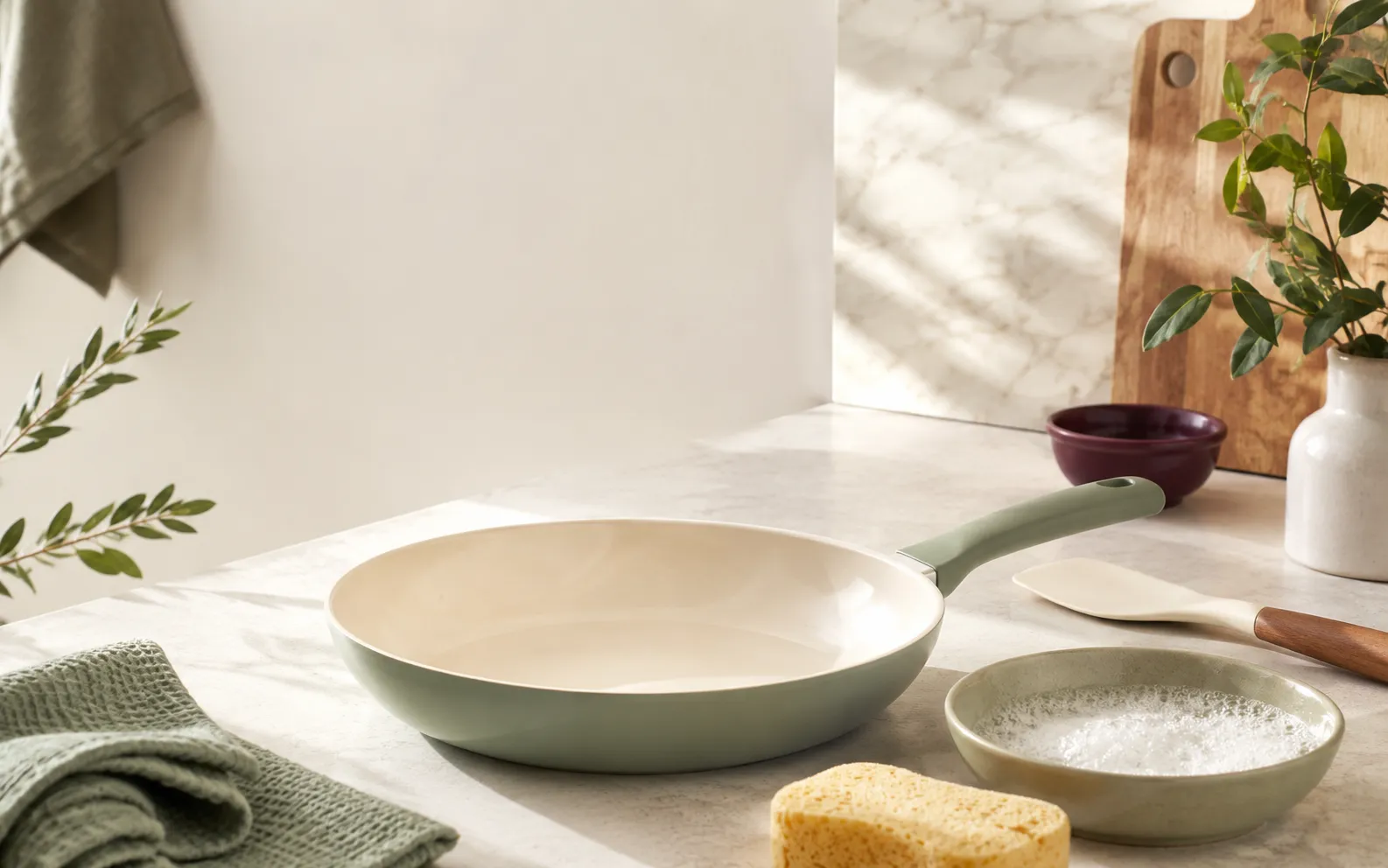
Warm water, a little dish soap, and a soft sponge are enough for most messes. Ceramic nonstick is easy to clean because food does not bond hard to the surface.
Avoid steel wool, abrasive scouring pads, rough scrub pads, and highly abrasive powdered cleansers. For stubborn bits, soak with warm water and a drop of dish soap before wiping.
Dishwasher-safe is not always dishwasher-best
Many ceramic nonstick pans carry a dishwasher-safe label, and occasional dishwasher use may be allowed. Repeated cycles still tend to wear the coating faster than hand washing.
Harsh detergents, extended hot water exposure, water pressure, and repeated heating and cooling all add up over time.
If you want the most life from a ceramic nonstick pan, hand washing is the better long-term habit.
Storage: stacking and pan protectors
Stacking pans directly on top of each other can scratch the cooking surface over time. Even if you cannot see the marks, the surface gets rougher with repeated contact.
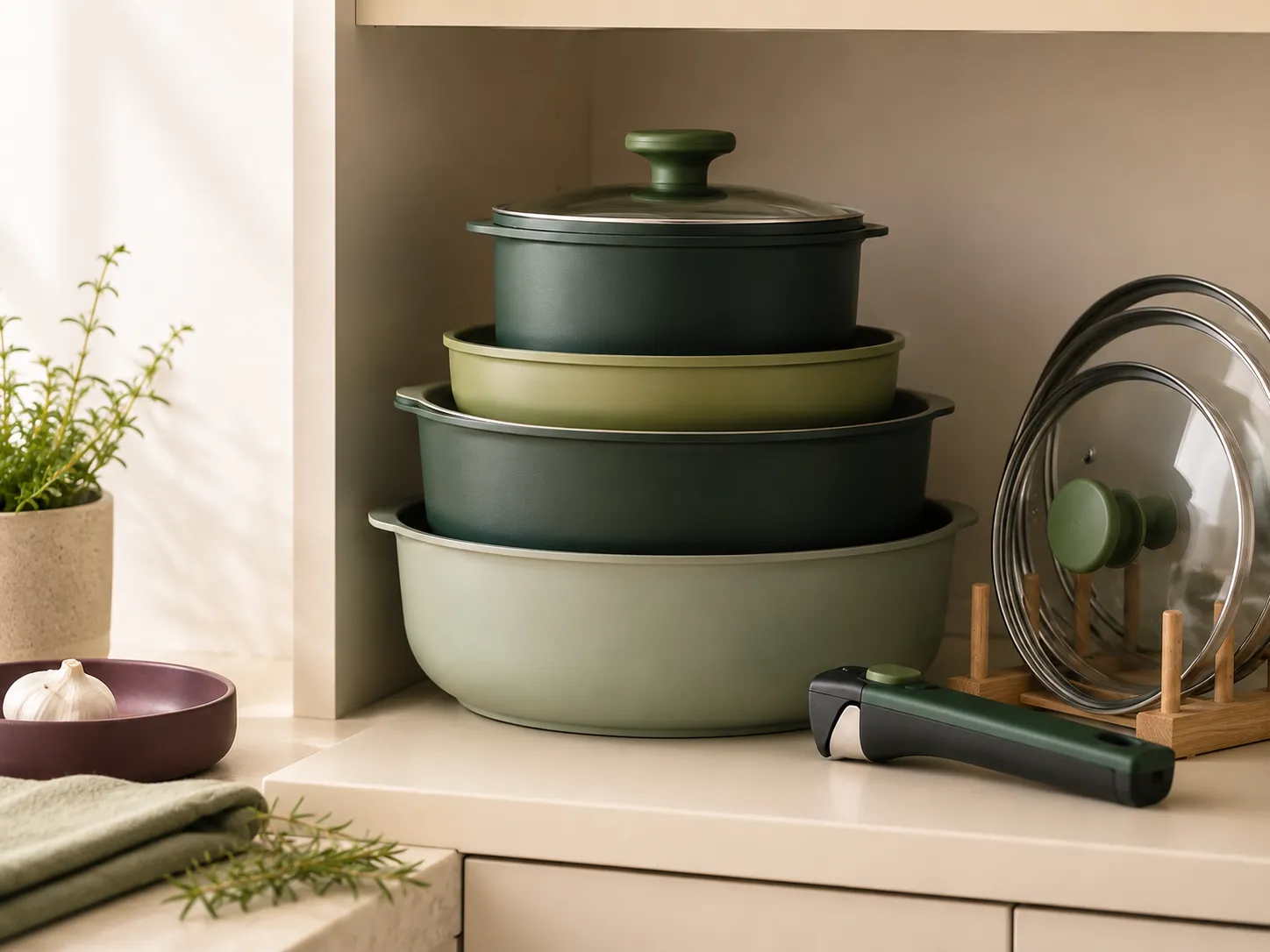
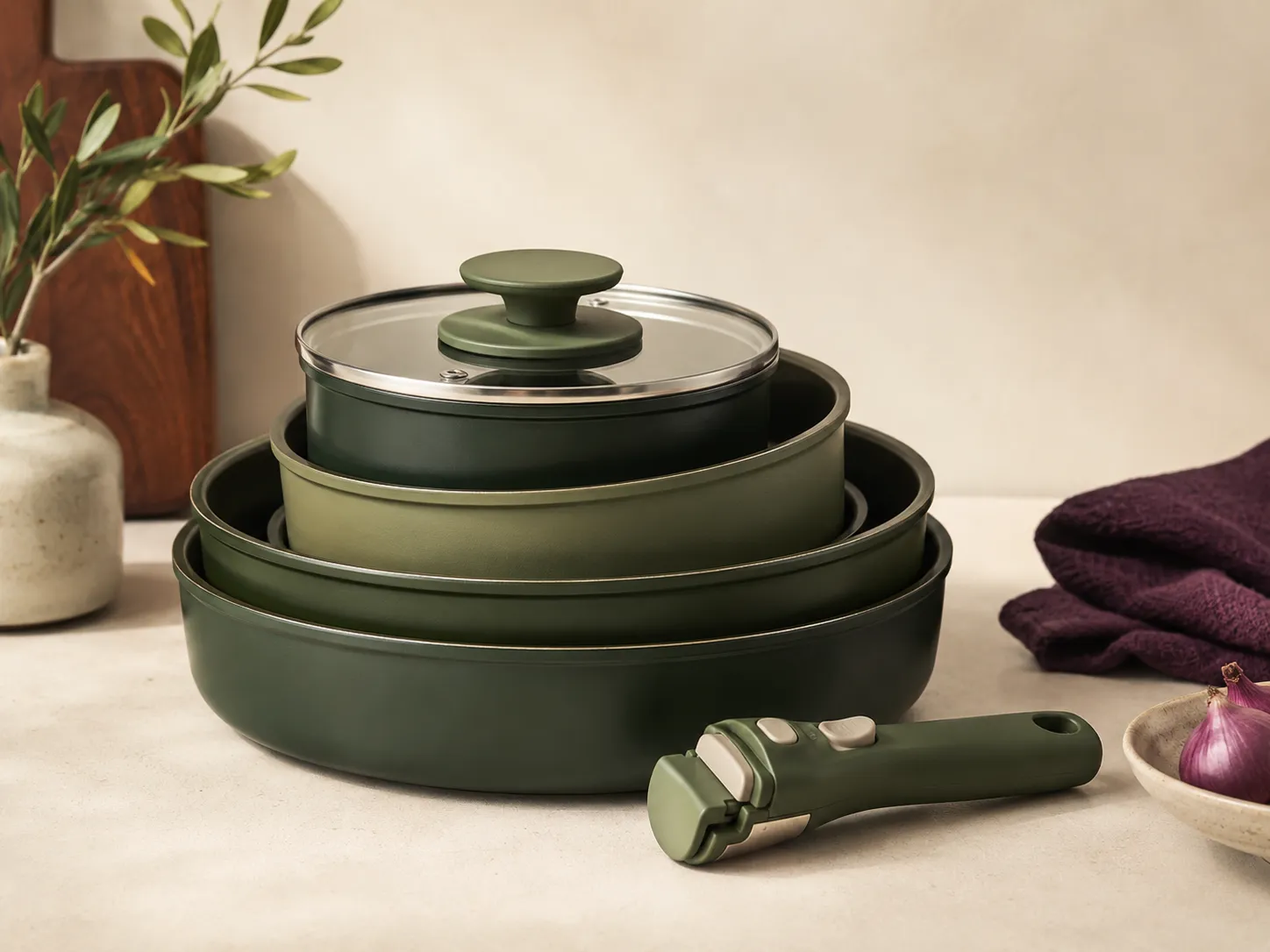
Pan protectors, hanging storage, or individual storage can help. Removable-handle pans can also make stacking and cabinet storage more compact when the set is designed for it.
Avoid storing lids, utensils, or other pans directly inside the pan on the cooking surface.
What to check in the current listing
Before buying or using a ceramic nonstick pan, check maximum oven-safe temperature, dishwasher information, metal utensil notes, stovetop compatibility, handle material, and whether pan protectors are included.
These details can vary between brands and even between product lines from the same brand.
Checking them upfront helps you use the pan the way it was designed to be used.
Brand examples
GreenLife, CAROTE, and Astercook all appear on BrandCookware.shop with ceramic nonstick cookware pages or related coated cookware options.
GreenLife is widely recognized for ceramic nonstick cookware. CAROTE often includes removable or detachable handle styles. Astercook produces multi-piece ceramic nonstick sets.
Specifications, included accessories, and care instructions vary by product, so always check the current listing for the specific pan or set.
Bottom line
Ceramic nonstick cookware is genuinely easy to cook with, and it stays that way longer when a few habits are in place.
Moderate heat, softer utensils, hand washing with a soft sponge, and careful storage are not complicated rules. They are the conditions that let the coating do what it is designed to do.
Once the habits click, maintaining ceramic nonstick becomes second nature.
Mistakes that shorten nonstick performance
- Cooking on high heat regularly or preheating an empty pan on high.
- Moving a very hot pan directly under cold water.
- Using metal utensils as the everyday default.
- Using aerosol sprays that leave residue buildup.
- Scrubbing with abrasive pads or steel wool.
- Stacking pans directly without protection.
- Storing utensils, lids, or heavy items inside the pan.
Keep comparing
FAQ
Can ceramic nonstick pans go in the dishwasher?
Many are labeled dishwasher-safe, and occasional dishwasher use may be allowed. Repeated cycles tend to wear down the coating faster than hand washing.
Can I use metal utensils on ceramic nonstick?
It depends on the specific pan. Silicone or wood utensils are the safer default because repeated metal contact can roughen the surface over time.
Why does food start sticking to ceramic nonstick?
Common causes include coating wear from high heat or abrasive cleaning, cooking spray residue, or scratches from metal utensils.
Should I use cooking spray?
Aerosol cooking sprays tend to leave residue on ceramic nonstick. A small drizzle of plain oil or butter usually works better.
Can I stack ceramic nonstick pans?
You can, but use pan protectors or another soft barrier so coated surfaces do not rub directly against other cookware.