A cookware set can look like the simple answer when old pans are scratched, mismatched, or missing lids. One box, one brand, one matching group of pots and pans feels easier than choosing everything one piece at a time.
But the set that looks complete online is not always the set that works best in your kitchen. Piece count can be the first trap because lids, utensils, removable handles, storage protectors, and inserts may all be counted.
Before buying, step back from the big number on the box and look at the set the way you will use it: one meal, one cabinet, one sink, and one stovetop at a time.
BrandCookware.shop may earn a commission from qualifying purchases.
Start with the pans you already reach for
Most people do not use every pan in their cabinet equally. There is usually one skillet for eggs, vegetables, grilled cheese, or quick dinners, plus a saucepan for oatmeal, rice, sauces, or reheating leftovers.
A stockpot matters if you make pasta, soup, or larger batches. A deeper skillet or saute pan can be useful for one-pan meals when you need more room than a standard frying pan gives you.
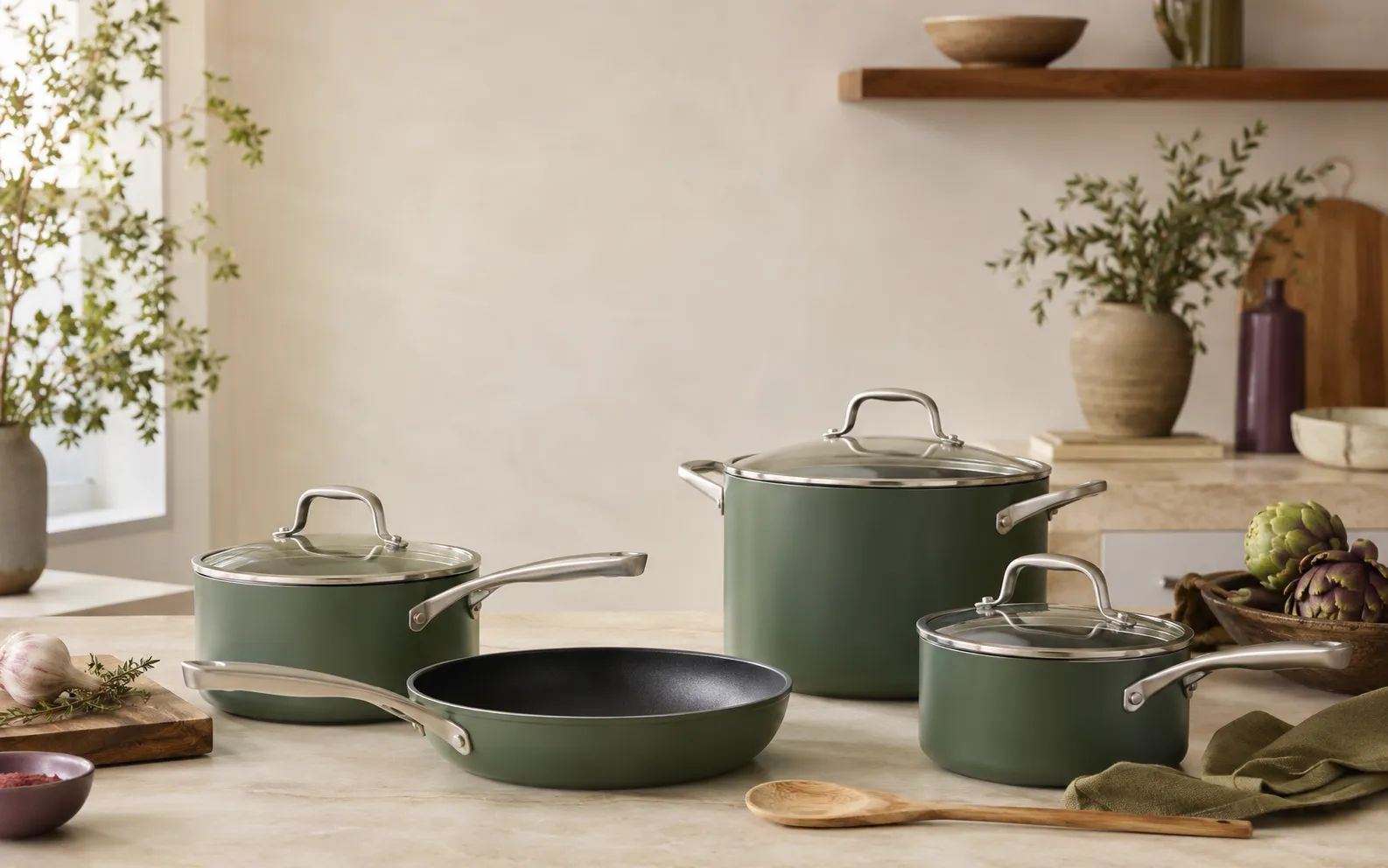
That everyday pattern should guide the purchase. A useful set usually starts with a skillet, saucepan, stockpot, deeper pan, and lids for the pieces that actually need covered cooking.
Do not trust the piece count by itself
Cookware set piece count is easy to misunderstand. A set may include several pots and pans, but it may also count each lid, utensil, removable handle, pan protector, or insert as a separate piece.
That is not automatically a problem. A lid can be important, and pan protectors can help if the cookware stacks. The problem is comparing sets only by the total number.
Count the actual pots and pans first, then look at the extras. A smaller set with the right skillet, saucepan, stockpot, and useful lids can beat a larger set with pieces you will not touch.
Read the contents list like you are unpacking the box
Look for the actual cookware first: frying pans, skillets, saucepans, saute pans, stockpots, Dutch ovens, and lids. After that, notice add-ons such as utensils, inserts, removable handles, and storage protectors.
Then go piece by piece. Would you use that smaller skillet, or would it stay stacked under a larger one? Is the saucepan a size you would reach for often? Are there lids for the pieces you would actually cover?
A lid for a pan you use every week is helpful. A lid for a pot that never leaves the cabinet is just more storage.
Choose the material around your cooking habits
Cookware material affects how a pan feels, how it behaves on the stove, how it cleans, and how much care it needs. It can also affect cooktop compatibility, so exact product details matter.
Nonstick and ceramic nonstick cookware often make sense for eggs, pancakes, delicate foods, and easier cleanup. They usually do better with gentler utensils, moderate heat, and careful storage.
Stainless steel is often used for searing, browning, boiling, and broad stovetop work. Aluminum-based cookware can feel lighter, but induction shoppers still need clear compatibility from the current listing.
Let your cooktop narrow the options
Cooktop compatibility can feel boring until it becomes the reason a set has to be returned. Gas, electric coil, glass-top electric, and induction cooktops can have different requirements.
For induction, cookware needs a compatible magnetic base. For glass-top stoves, a flat and stable base matters. For gas, handle comfort and pan balance can matter because flame can reach around the pan edge.
Do not rely only on product photos. If your stove is induction, start there before looking at color, piece count, or style.
Think about where the set will live
A cookware set does not only need to work on the stove. It also needs to fit somewhere when dinner is over.
Storage is especially important for apartments, shared kitchens, RVs, shallow drawers, narrow lower cabinets, and sets with bulky lids or long fixed handles.
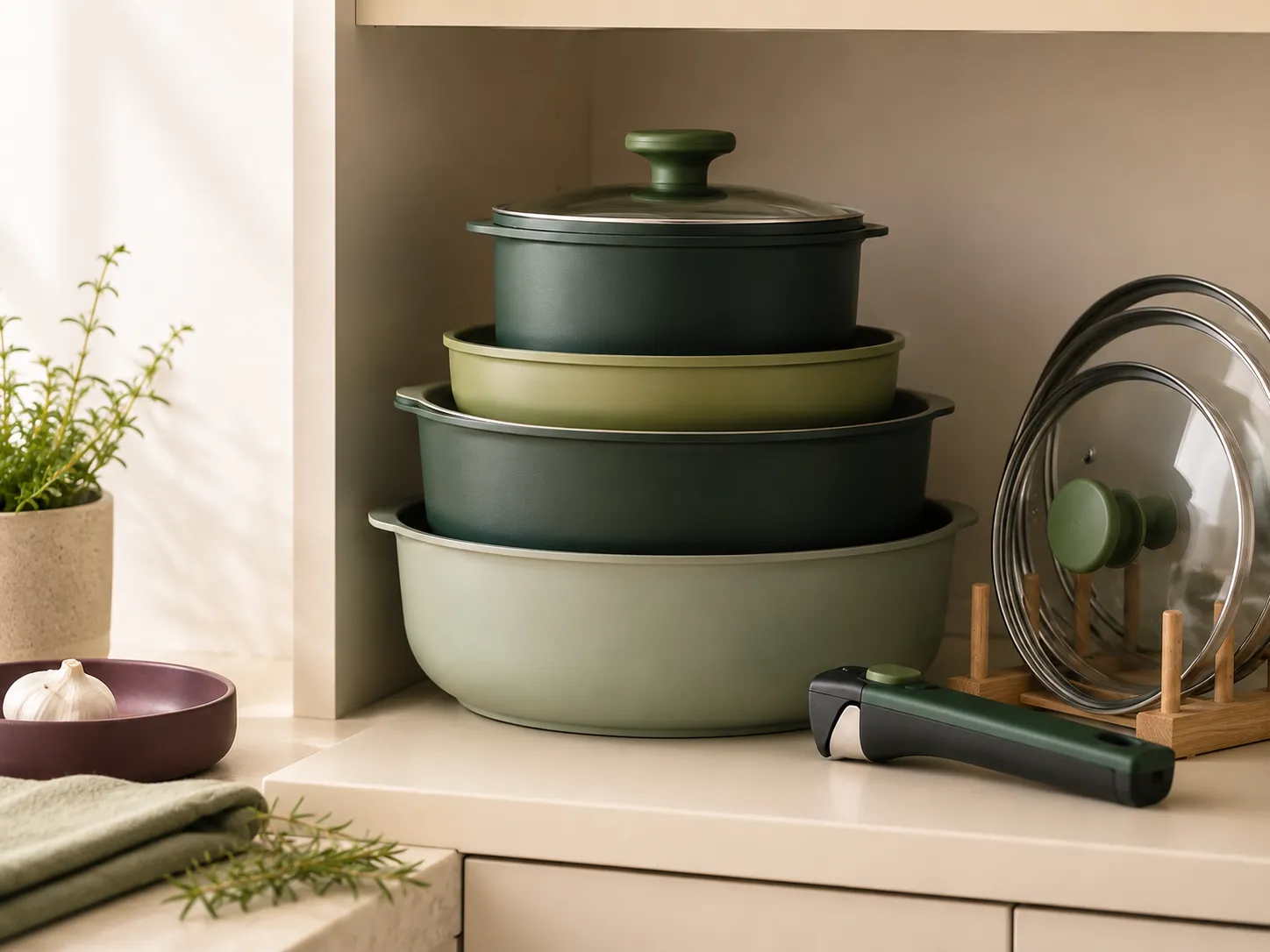
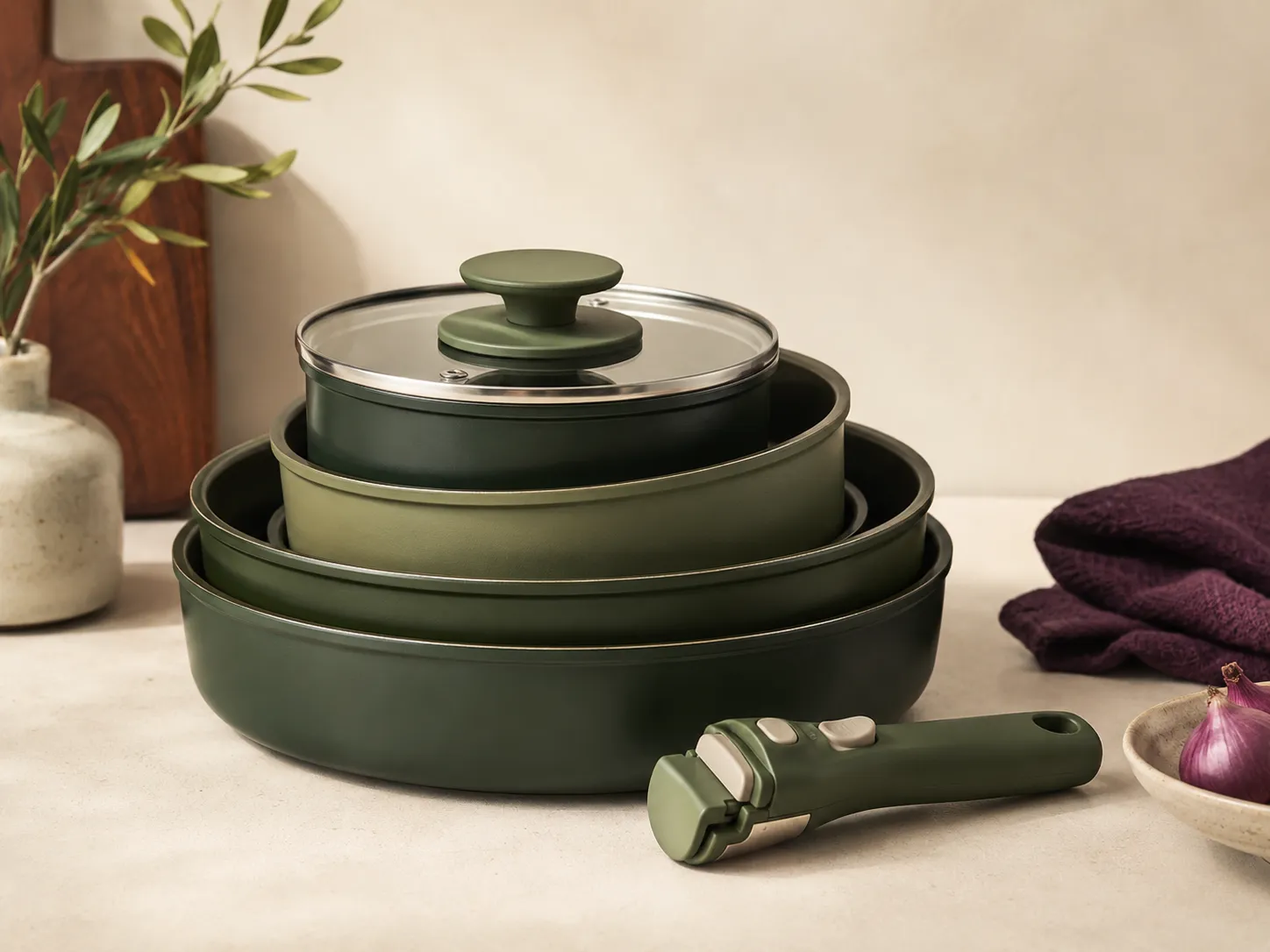
Stackable cookware and removable-handle cookware can help in tight spaces, but the real advantage depends on the set design. Notice how the lids are meant to store and whether pan protectors are included.
Handles, lids, and care notes matter
The pan body gets most of the attention in product photos, but handles and lids affect daily use. A saucepan without a useful lid may be less practical for rice, sauces, or reheating.
Do not assume every part of the set has the same oven or dishwasher guidance. Lids, handles, and cookware bodies can have different restrictions.
Dishwasher-safe cookware can be convenient, but care instructions still matter. With coated cookware, utensil type, heat level, stacking, and abrasive cleaners can all affect how the cooking surface holds up.
When a cookware set makes sense
A cookware set makes sense when you are starting a kitchen, replacing mismatched pans, moving into a new home, or trying to build a consistent group of pieces from one brand.
It can also make sense if the set includes the pieces you already know you need. A frying pan, saucepan, stockpot, and a few useful lids can cover a lot of everyday cooking.
For shoppers comparing BrandCookware.shop brand pages, GreenLife, CAROTE, and Astercook may be worth browsing if their current listings match your preferred material, storage needs, and cooktop requirements.
When a set may not be the right move
A cookware set may not be the right purchase if you only need one replacement skillet or one larger pot. In that case, a single pan can be easier to choose and store.
It may also be the wrong fit if the set includes several pieces you already own. Look in your cabinets before buying, then fill the real gaps.
Bottom line
A cookware set is useful only when the pieces match your cooking, storage, stove, and cleaning habits.
Start with the pans you actually use. Count real cookware pieces instead of relying on the headline piece count. Then check compatibility, care instructions, lids, handles, oven guidance, and dishwasher information.
The right set is not always the largest set. It is the one you will keep reaching for after the first week.
A practical checklist before you buy
- Count the actual pots and pans, not only the total piece count.
- See whether lids, utensils, handles, inserts, or protectors are counted.
- Confirm cooktop compatibility, especially for induction.
- Check whether the set includes the pan sizes you use most.
- Read the care instructions for the exact model.
- Confirm oven and dishwasher details, including lid or handle limits.
- Think about cabinet space before choosing a large set.
- Notice whether handles are fixed or removable.
Keep comparing
FAQ
How many pieces should a cookware set have?
There is no single number that works for every kitchen. A smaller set can be enough if it includes a skillet, saucepan, stockpot, and useful lids. A larger set makes more sense if you cook often and need several pan sizes.
Do lids count as cookware pieces?
Often, yes. Many cookware sets count lids as separate pieces. Some sets may also count utensils or accessories, so check the itemized contents instead of relying only on the total number.
Is ceramic nonstick cookware the same as regular nonstick cookware?
Not exactly. Ceramic nonstick is a type of nonstick cookware, but the material, coating description, care guidance, and heat limits can vary by product. Check the current listing for the exact set you are considering.
What should I check if I have an induction cooktop?
Look for clear induction compatibility in the current listing or manufacturer information. Do not assume a pan works on induction based on appearance.
Should I buy a set or individual pans?
Buy a set if you need several pieces and the included pans match your cooking habits. Buy individual pans if you only need to replace one item or want to build a more specific setup over time.